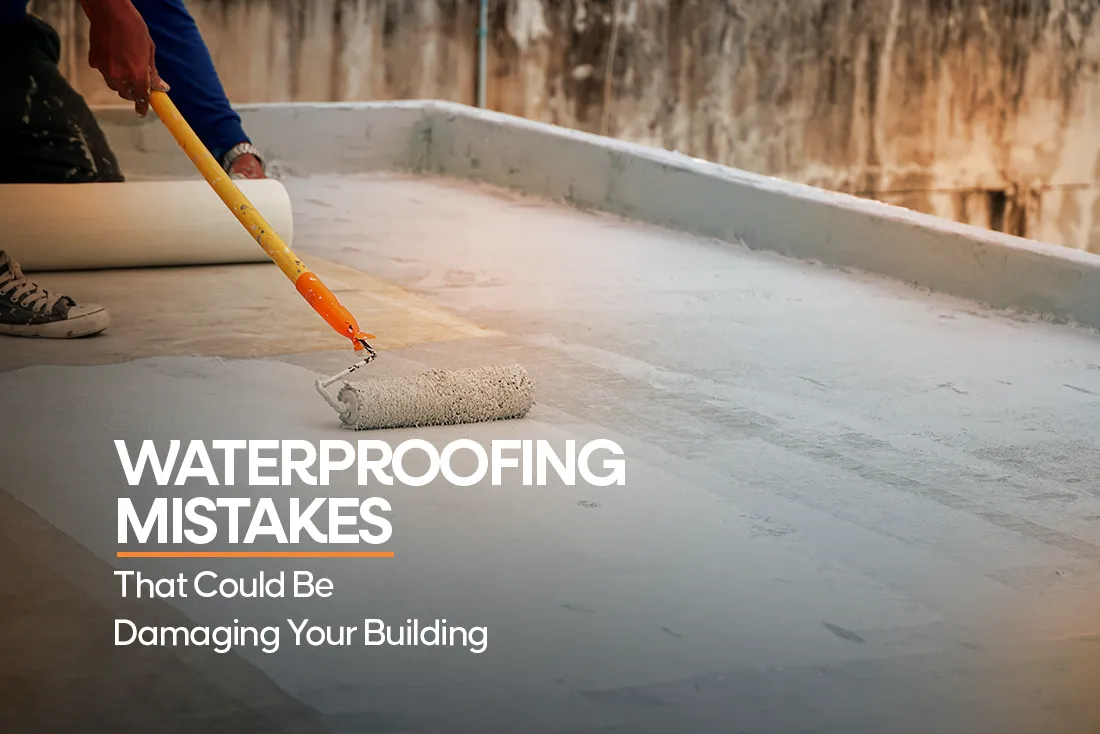
Waterproofing Mistakes That Could Be Damaging Your Building
In construction, waterproofing is often treated as a “finishing touch.” Unfortunately, this mindset leads to some of the most common and costly building failures—from damp walls and peeling paint to structural decay and fungal growth. Waterproofing isn’t just about aesthetics; it’s your building’s first line of defense against long-term damage.
So why do so many buildings suffer from seepage, leaks, and water damage even when waterproofing has been “done”? The answer lies in the mistakes made during product selection, preparation, and application.
Let’s explore the top waterproofing mistakes you should avoid, and how BYM Aquaseal waterproofing systems can help you get it right the first time.
❌ Mistake 1: Using Paint Instead of Real Waterproofing
Many builders and homeowners mistake exterior paint for waterproofing. But while paint may resist water momentarily, it does not form a barrier against seepage, capillary action, or long-term moisture exposure.
Paint ≠ Waterproofing. Paint flakes, cracks, and fades over time.
✅ The Right Approach:
Use a certified waterproofing solution like BYM AQUASEAL ACRYLIC AS 29 — a brushable acrylic polymer that forms a flexible, durable, and UV-resistant membrane when mixed with cement. It’s perfect for:
- Terrace and balcony waterproofing
- External walls & parapets
- Bathrooms and wash areas
AS 29 resists water penetration while still allowing the surface to breathe — preventing peeling, mold, and blistering over time.
❌ Mistake 2: Ignoring Integral Waterproofing in Concrete
Waterproofing only the surface is a half-done job. Concrete is naturally porous, and if it’s not protected from within, water will eventually seep through slabs, walls, and foundations — causing rusting of steel, efflorescence, and structural degradation.
✅ The Right Approach:
Mix BYM AQUASEAL IW AS 25 into the concrete or mortar during casting or plastering. This integral waterproofing compound:
- Blocks capillary pores
- Reduces water absorption
- Prevents shrinkage cracks
- Enhances overall concrete durability
IW AS 25 is ideal for use in roofs, basements, slabs, beams, and tanks — essentially any concrete or plaster mix that may come in contact with water.
❌ Mistake 3: Skipping Crack Repair Before Waterproofing
One of the biggest mistakes is applying a waterproof coating over visible or hairline cracks without treating them first. These cracks eventually widen and break the waterproofing layer — letting moisture in and defeating the purpose altogether.
✅ The Right Approach:
Use BYM AQUASEAL SBR AS 27 — a styrene-butadiene rubber-based latex that acts as:
- A bonding agent
- A flexible mortar modifier
- A crack repair solution
SBR AS 27 enhances adhesion, fills fine cracks, and increases tensile strength. Apply it before waterproofing coatings for long-lasting protection. It’s perfect for:
- Patch repairs
- RCC structure rehab
- Waterproofing toilets, sunken slabs, and wet areas
❌ Mistake 4: Improper Mixing & Application
Even with the best products, waterproofing can fail due to poor site practices. This includes:
- Wrong dilution ratios
- Skipping surface preparation
- Uneven coating thickness
- Not applying recommended number of coats
- Ignoring curing time between coats
All these errors reduce membrane thickness and leave areas vulnerable to leakage.
✅ The Right Approach:
- Follow BYM’s recommended mix ratios and coverage guidelines.
- Clean the surface thoroughly before application.
- Always apply at least two coats, especially on terraces and vertical surfaces.
- Allow proper drying time between coats.
BYM’s Aquaseal range is designed for ease of mixing and consistent performance when applied as instructed.
🏠 Real-World Impact of Waterproofing Mistakes
Let’s say you waterproof your terrace using a paint-like product without treating expansion joints or cracks. Within a few months, monsoon rains begin to penetrate the slab. Damp patches appear on the ceiling below, paint peels off, and steel rods start corroding.
Had the surface been treated with SBR (AS 27) and coated with AS 29, supported by IW AS 25 in the RCC, the problem wouldn’t have occurred.
Waterproofing is not a patchwork fix. It’s a system.
🧰 BYM’s Complete Waterproofing System
To avoid these costly mistakes, BYM offers an integrated approach:
| Problem Area | Recommended BYM Product | Application Type |
| Concrete/Plaster Mix | AQUASEAL IW AS 25 | Integral waterproofing |
| Crack Repair | AQUASEAL SBR AS 27 | Latex modifier & crack filler |
| Terrace/Wall Coating | AQUASEAL ACRYLIC AS 29 | Brushable coating |
| Toilets, Bathrooms | AS 27 + AS 29 Combo | Internal waterproofing system |
All products are IS compliant, lab-tested, and field-proven under Indian site conditions.
🛠️ Pro Tips from BYM Experts
- Don’t skip waterproofing in sunken slabs and duct areas — they are leak-prone.
- Apply AS 29 in cross coats for uniformity and membrane strength.
- For existing cracks >2mm, use PU sealants or crack paste before coating.
- Mix only as much product as you can use within pot life.
- Protect freshly coated areas from direct rain until fully cured.
🧾 Conclusion
Waterproofing is not just another step — it’s an investment in the life and health of your structure. A leak-proof building is not only more comfortable to live in, but also more durable, cost-effective, and resale-worthy.
Avoid common mistakes by choosing the right combination of waterproofing products, using the correct application methods, and trusting certified brands like BYM Construction Chemicals.